
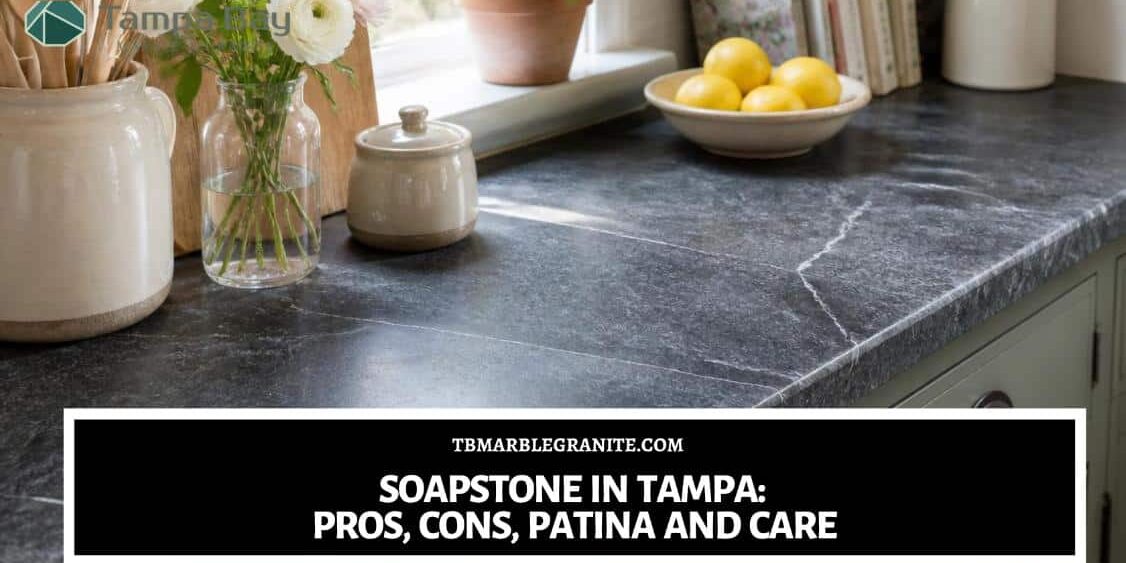
Soapstone is a countertop material that generates real enthusiasm among homeowners who know it and genuine curiosity among those who are encountering it for the first time. It does not look or behave like granite or engineered quartz. It has a character that is distinctly its own, and it suits a specific kind of homeowner who values natural warmth, chemical-free maintenance, and a surface that develops a rich appearance over time. If you are evaluating soapstone for a Tampa kitchen or bathroom renovation, this guide from Tampa Bay Marble & Granite gives you the honest picture of what makes it appealing and where its limitations are real.

soapstone countertops pros cons Tampa
What Soapstone Is and Why It Stands Apart
Soapstone is a natural metamorphic rock composed primarily of talc. The talc content gives it a smooth, slightly waxy surface feel that no other countertop material replicates. It has been used for countertops, scientific laboratory surfaces, and fireplace surrounds for generations. Its track record in demanding environments is long.
The color palette is narrow compared to granite or quartz. Soapstone runs in dark gray, blue-gray, and green-gray tones with subtle natural veining and variation. If a wide color range or dramatic pattern movement is important to the design, soapstone cannot deliver that. If the quiet depth of a dark natural stone appeals, it is difficult to find a material that competes.
The Genuine Advantages of Soapstone
- Non-porous by composition: soapstone does not require sealing. Its dense talc structure prevents liquid penetration, including acids like lemon juice and vinegar that would etch marble or attack granite sealer. This is a meaningful practical advantage in Tampa’s active kitchen environments.
- Heat tolerance: soapstone handles high temperatures without discoloration or damage. It has historically been used for wood stove surrounds and scientific lab surfaces precisely because of this. Warm cookware on soapstone is not a concern.
- Chemical inertness: soapstone does not react to acidic kitchen ingredients or common cleaning products. Cleaning requires nothing more than mild soap and warm water.
- Developing patina: soapstone acquires a rich, aged character over time that many homeowners find deeply appealing. It looks lived-in in a way that feels intentional.
- Repairability: surface scratches and minor dents can be sanded out and refinished with mineral oil. This restoration option does not exist with quartz or most other countertop materials.
The Genuine Limitations of Soapstone
- Soft surface: soapstone scores between 1 and 2 on the Mohs scale. Granite scores 6 to 7. Soapstone scratches from knives, hard cookware, and regular kitchen contact. Scratching is a normal part of owning soapstone, not an occasional accident.
- Narrow color and pattern range: the palette is constrained by the mineral composition of the stone
- Patina management: the changing appearance requires active management to stay looking intentional rather than uneven
- Availability: soapstone slab availability in the Tampa Bay area may be more limited than granite or quartz, affecting selection and potentially lead times
- Cost: soapstone is priced at the mid-to-high end of the natural stone range
Understanding the Patina in Tampa’s Climate
Left untreated, soapstone darkens gradually as oils from hands, food, and cleaning products absorb into the surface. Areas of higher contact darken first, creating an uneven look during the transition period. In Tampa’s warm, humid climate, the natural darkening process may develop somewhat faster than in cooler or drier regions.
Most soapstone owners manage this by applying food-grade mineral oil to the surface. When oiled, soapstone darkens immediately and evenly to a rich dark gray or near-black tone. The oil does not seal the stone the way a granite sealer works. It accelerates the natural patina and creates visual consistency. Reapplication every few months, or whenever the surface looks lighter or uneven, maintains the result. Some homeowners oil more frequently in the first year to establish a consistent patina base, then settle into a lighter routine.
Caring for Soapstone in Tampa’s Gulf Coast Climate
- Everyday cleaning: mild soap and warm water. The non-porous, chemically inert surface cleans easily without specialty products.
- Patina maintenance: food-grade mineral oil applied with a soft cloth and buffed clear when the surface looks lighter or uneven
- Scratch repair: 220-grit or finer sandpaper smooths surface scratches. Follow with mineral oil to restore consistent color.
- What to avoid: abrasive scrubbers and harsh chemical cleaners. Neither is necessary given soapstone’s natural chemical resistance, and both accelerate wear on an already soft surface.
Tampa’s year-round warmth and humidity are generally compatible with soapstone. The material’s non-porous, talc-dominant composition does not absorb ambient moisture in ways that create surface or structural issues over time.

soapstone durability kitchen
Frequently Asked Questions
Is soapstone practical for an active Tampa family kitchen?
It can be, with honest expectations. The non-porous surface is genuinely food-safe, heat tolerance is excellent, and the material cleans easily. Scratching is inevitable in a high-use kitchen. Whether that bothers you depends on your relationship with the material. Homeowners who appreciate the character of a lived-in stone tend to love soapstone. Homeowners who expect a pristine surface over years of heavy daily use will find it frustrating.
Does soapstone chip the way quartz does?
Soapstone’s softness changes the impact failure mode. Rather than fracturing or chipping sharply, soapstone tends to dent or compress at the point of contact. That damage can be sanded and refinished rather than filled with epoxy. A different wear profile, and in some ways more forgiving in terms of repair options.
Is soapstone good for a Tampa bathroom vanity?
Soapstone performs very well in Tampa bathroom vanity applications. Soap, water, and personal care products do not react with the stone, no sealing is required, and the patina develops more slowly in a bathroom than in a kitchen. For Tampa homeowners who want the soapstone aesthetic with a lighter maintenance routine, bathroom vanities are an excellent starting point.
Explore Natural Stone Options at Tampa Bay Marble & Granite
Our team can help you compare soapstone alongside granite, quartzite, and marble vanity tops to find the right fit for your Tampa renovation. Find us on Google Maps or visit the Tampa Bay Marble & Granite showroom to see available slabs in person.